Letterboxing is an intriguing “treasure hunt” style outdoor activity. Letterboxers hide small, weatherproof boxes in publicly-accessible places (like parks) and post clues to finding the box online on one of several Web sites. However, clues to finding some of the most highly-sought boxes are passed around by word of mouth. There are about 20,000 letterboxes hidden in North America alone. Individual letterboxes usually contain a log book, an often hand-carved rubber stamp and may contain an ink pad. Finders make an imprint of the letterbox's stamp on their personal log book, and leave an imprint of their personal stamp on the letterbox's logbook .
Letterboxing is said to have started in England in 1854 when a Dartmoor National Park guide, James Perrott of Chagford, left a bottle by Cranmere Pool with his calling card in it an an invitation to those who found the bottle to add theirs. Eventually, visitors began leaving a self-addressed post card or note in the jar, hoping for them to be returned by mail by the next visitor (thus the origin of the term “letterboxing;” “letterbox” is a British term for a mailbox). This practice ended in time, however, and the current custom of using rubber stamps and visitor’s log books came into use. It caught on in the US in 1998 after an article in Smithsonian magazine.
To get started, you’ll need a “trail name,” rubber stamp, pencil or pen, small sketch book, one or more ink pads or brush markers, a simple compass, and clues.
1. Trail Name
A trail name is your letterboxing identity. Some letterboxers chose to use their real name, but most chose a trail name that is means something special to them. Examples of trail names are Mark & Sue, The Drew Clan, Team Green Dragon, The Wild Cats, Silent Doug, Clueless, and Choi.
2. Rubber Stamp
The image for the rubber stamp should mean something personal to you or your family and is either hand-carved or commercially made. Most letterboxers start with a commercially made or "store bought" stamp. This is your “personal stamp” and you’ll use this to make an imprint in the log book contained in each letterbox that you find. If you letterbox as a family, you can either use one team stamp or a stamp for each person.
3. Pencil or Pen
The pencil or pen is used to add your trail name and date next to your personal stamp imprint that you’ve made in the log book. You might also want to add a personal comment about your experience finding the letterbox.
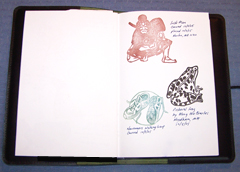
4. Sketch Book
The sketch book is your “personal log book” where you stamp imprints using the stamps in the letterboxes that you find. It’s best to use acid-free medium to heavy weight paper. Paper with a smooth finish gives the best impression. An alternative is to make an imprint from the letterbox stamp on plain paper or index card then later cut it out and add it to a scrapbook.
5. Ink Pad
At a minimum, you should carry one inkpad. The easiest type to use has a raised foam pad. Archival Ink pads by Ranger are really the best, dry instantly, are waterproof and readily available in the big box craft stores. Ancient Page also possess the same qualities. StazOn alcohol pads are terrific too. If you find that you enjoy letterboxing, you may want to purchase a set of 24 Marvy Brush Makers. Their large brush point and bright, non-toxic, odorless watercolor make them perfect for rubber stamping because the color stays wet longer than other markers. They're a good choice on stamps that are suitable for inking in multiple colors.

6. Compass (optional)
Although many letterbox clues don’t require it, you should consider purchasing a simple baseplate compass, such as the Suunto A-10 (about $12). You won’t need a fancier compass with sighting or declination adjustment, since nearly all letterbox clues that reference compass bearings use magnetic bearings.
7. Clues
Now that you’re fully equipped, you need to locate some clues to letterboxes near you. The primary web site for letterboxing clues is www.letterboxing.org. Another popular web site is www.atlasquest.com. Once you find the clues to a letterbox that you’d like to find, read it carefully and try to locate and print out a trail map of the area in which you’ll be hiking.
The most important things to remember when letterboxing are respect and safety. Respect for the environment and for the letterbox that someone has created and your personal safety.


3 comments:
I've heard of this before, but never thought of boxes being placed here! This would be so much fun to start at home and continue while out of town. I'm with you on the creating of a name, etc. We'll think of something clever, I'm sure!
Oh my gosh - I LOVE it!! I think Briley might be a little too young, but we'd still LOVE to do it! I'm so glad that we got to see you guys today. Enjoy Cow Appreciation Day tomorrow...
WOW, that sounds like fun! This is something I would love to do!!! :)
Post a Comment